

🌊 Rip Currents on the Outer Banks: What They Are, How to Spot Them, and How to Stay Safe
Rip currents are one of the most dangerous — and misunderstood — hazards along the Outer Banks coastline. Even on calm, sunny days, these powerful channels of water can form unexpectedly and pull swimmers away from shore. Understanding how rip currents work, how to identify them, and what to do if you’re caught in one can save your life or the life of someone you love.
🌀 What Exactly Is a Rip Current?
A rip current is a narrow, fast-moving stream of water that flows away from the beach, cutting through the incoming waves. They often form near sandbars, piers, jetties, or areas where waves break unevenly.
Anatomy of a Rip Current
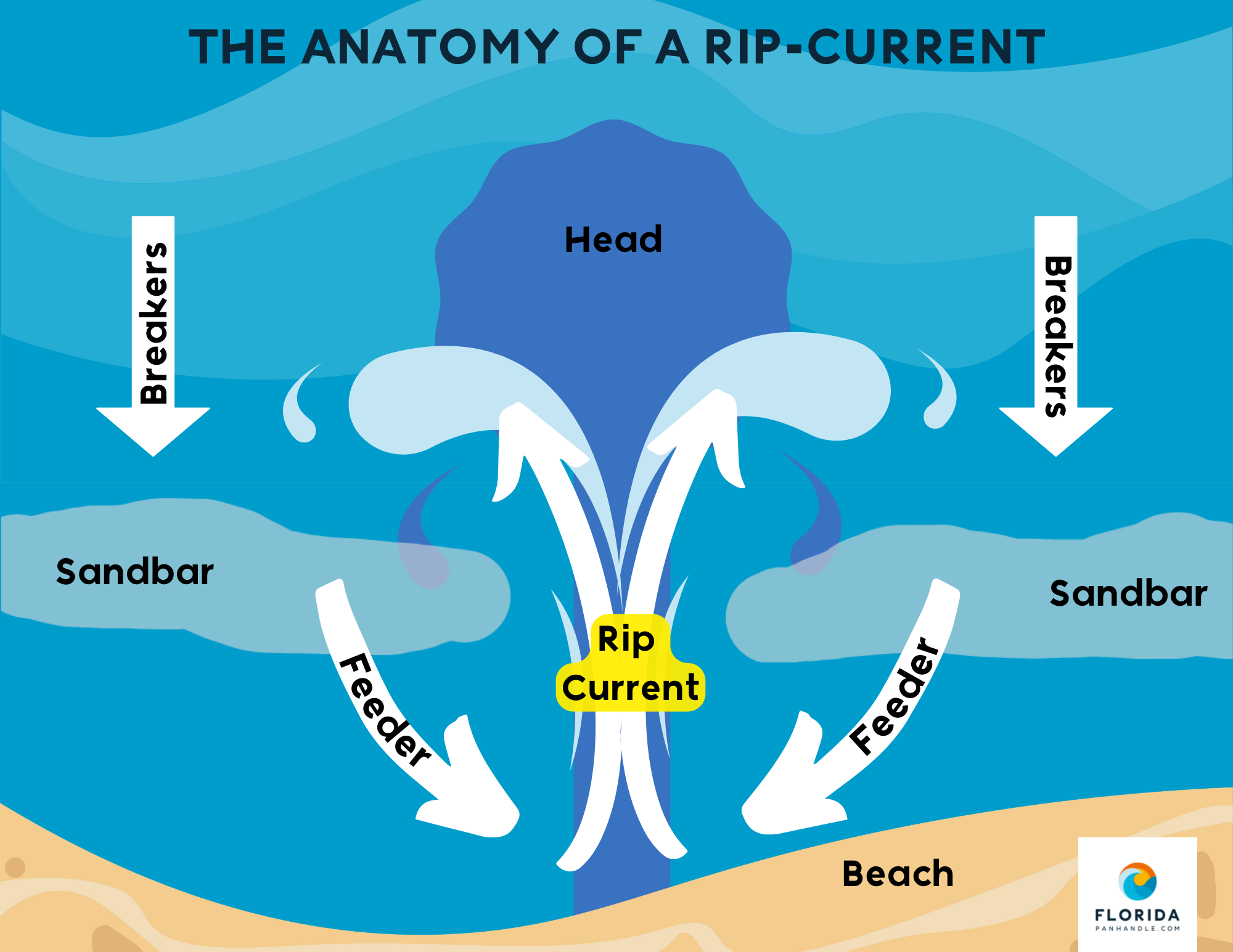
Rip currents can move at speeds of 1–2 feet per second, and strong ones can exceed 8 feet per second — faster than even Olympic swimmers.
⚠️ Why Rip Currents Are So Dangerous
Even experienced swimmers can be caught off guard. The danger isn’t that rip currents pull you underwater — they don’t. The danger is exhaustion from trying to swim directly against the current.
Key risks include:
- Rapid pull offshore, creating panic
- Strong, narrow channels that are hard to escape by force
- Sudden formation, even on low‑surf days
- False sense of security — the water may look calm where the rip forms
👀 How to Spot a Rip Current on the Outer Banks
Rip currents often look different from the surrounding water. When you’re scanning the surf, look for:
Visual Signs

- A break in the wave pattern — waves may not break in the rip channel
- Choppy, churning, or foamy water moving seaward
- A darker, deeper-looking patch of water
- Sand or foam being pulled offshore
- A narrow “river” of water heading straight out
Pro Tip
Before entering the water, spend 30–60 seconds watching the surf. Many rip currents reveal themselves if you simply pause and observe.
🚨 What to Do If You’re Caught in a Rip Current
Staying calm and using the right strategy is the key to survival.
1. Don’t Panic — and Don’t Fight the Current
Trying to swim directly back to shore will exhaust you quickly.
2. Swim Parallel to the Shore
Rip currents are usually narrow. Swimming left or right gets you out of the fast-moving channel.
3. Float or Tread Water if You Can’t Break Free
Rip currents eventually weaken beyond the breaking waves. Floating conserves energy.
4. Signal for Help
Wave your arms and yell if you need assistance.
5. Then Swim Back to Shore at an Angle
Once out of the current, swim diagonally toward the beach.
🏖️ How to Avoid Rip Currents Altogether
- Swim near lifeguards — 80% of beach rescues involve rip currents.
- Check the daily beach forecast from NWS and local lifeguards.
- Avoid swimming near piers, jetties, or sandbars where rips commonly form.
- Heed red flags — they’re posted for a reason.
- Never swim alone, especially on rough surf days.
🌊 Outer Banks Ocean Rescue & Lifeguard Links (North to South)
Corolla (Currituck County) – Corolla Beach Rescue
Corolla’s beaches are protected by Corolla Beach Rescue, which staffs multiple stands from Ocean Hill through Ocean Sands and down to the Hampton Inn access.
🔗 Corolla Beach Rescue (Currituck County)
https://co.currituck.nc.us/beach-rescue/ (co.currituck.nc.us in Bing)
Duck – Duck Surf Rescue
The Town of Duck operates Duck Surf Rescue, with stands at Barrier Island Station, Schooner Ridge, Four Seasons, Snow Geese, Scarborough Lane, Plover Drive, and Hillcrest.
🔗 Duck Surf Rescue
https://www.townofduck.com/surf-rescue/ (townofduck.com in Bing)
Southern Shores – Southern Shores Surf Rescue
Southern Shores Surf Rescue covers the town’s beach accesses including Chicahauk Trail, East Dogwood Trail, Ocean Blvd, Ocean View Loop, and Byrd Street.
🔗 Southern Shores Surf Rescue
https://www.southernshores-nc.gov/departments/fire-department/ocean-rescue/ (southernshores-nc.gov in Bing)
Kitty Hawk – Kitty Hawk Ocean Rescue
Kitty Hawk Ocean Rescue staffs lifeguards at Eckner Street, the Bathhouse, Atlantic Street, and other key accesses.
🔗 Kitty Hawk Ocean Rescue
https://www.kittyhawknc.gov/ocean-rescue/ (kittyhawknc.gov in Bing)
Kill Devil Hills – Kill Devil Hills Ocean Rescue
Kill Devil Hills has the most lifeguarded beach accesses on the OBX, with 21 stands including Asheville Street, Avalon Pier, Baum Street, Carlow Avenue, Clark Street, and more.
🔗 Kill Devil Hills Ocean Rescue
https://www.kdhnc.com/197/Ocean-Rescue (kdhnc.com in Bing)
Nags Head – Nags Head Ocean Rescue
Nags Head Ocean Rescue covers the town’s full stretch of beach with staffed stands and roving patrols from Memorial Day through Labor Day.
🔗 Nags Head Ocean Rescue
https://www.nagsheadnc.gov/198/Ocean-Rescue (nagsheadnc.gov in Bing)
Hatteras Island – Cape Hatteras National Seashore (NPS)
Hatteras Island beaches are protected by National Park Service lifeguards at select locations including Coquina Beach, Hatteras, and Ocracoke.
🔗 Cape Hatteras National Seashore – Lifeguarded Beaches
https://www.nps.gov/caha/planyourvisit/beach-safety.htm (nps.gov in Bing)
Here’s a clean, comprehensive, ready‑to‑paste list of every lifeguarded beach location on the Outer Banks, organized north to south. This uses the most authoritative, publicly available sources from local towns, counties, and the National Park Service.
If you want, I can also turn this into a map embed, WordPress‑formatted table, or sidebar callout box for your rip‑current blog post.
🛟 Lifeguarded Beach Locations on the Outer Banks (North → South)
(Seasonal: generally Memorial Day–Labor Day unless noted)
🟦 Corolla (Currituck County – Corolla Beach Rescue)
Lifeguards typically staff stands from Ocean Hill → Ocean Sands → Pine Island → Corolla Village.
Primary Lifeguarded Areas:
- Corolla Village Road Access
- Corolla Light Resort area
- Whalehead Beach accesses
- Buck Island
- Ocean Sands (multiple stands)
- Pine Island (north & south sections)
🟩 Duck (Duck Surf Rescue)
Duck has seven staffed lifeguard stands.
Lifeguarded Accesses:
- Barrier Island Station
- Schooner Ridge
- Four Seasons
- Snow Geese
- Scarborough Lane
- Plover Drive
- Hillcrest Drive (public access)
🟨 Southern Shores (Southern Shores Surf Rescue)
Southern Shores has five staffed lifeguard stands.
Lifeguarded Accesses:
- Hillcrest Ave
- Chicahauk Trail
- East Dogwood Trail
- Ocean Boulevard
- Ocean View Loop
- Byrd Street
🟧 Kitty Hawk (Kitty Hawk Ocean Rescue)
Kitty Hawk maintains four primary lifeguarded areas.
Lifeguarded Accesses:
- Eckner Street
- Lillian Street
- Kitty Hawk Bathhouse (Regional Access)
- Byrd Street (shared coverage with Southern Shores)
🟥 Kill Devil Hills (KDH Ocean Rescue)
Kill Devil Hills has the largest number of lifeguarded stands on the OBX — 21 total.
Key Lifeguarded Accesses Include:
- First Street
- Second Street
- Third Street
- Fifth Street
- Avalon Pier
- Baum Street
- Clark Street
- Carlow Avenue
- Ocean Bay Boulevard
- Helga Street
- Oregon Avenue
- Atlantic Street
- Prospect Avenue
(and many more — nearly every major access has a stand)
🟪 Nags Head (Nags Head Ocean Rescue)
Nags Head staffs 14+ lifeguard stands plus roving ATV patrols.
Lifeguarded Accesses Include:
- Bonnett Street
- Enterprise Street
- Gull Street
- Hollowell Street
- Abalone Street
- Loggerhead Street
- Gulfstream Street
- Epstein Street
- Curlew Street
- Jennette’s Pier area
- Blackman Street
- Old Oregon Inlet Road (select areas)
🟫 Hatteras Island (Cape Hatteras National Seashore – NPS)
The National Park Service provides lifeguards at four major beaches.
Lifeguarded Beaches:
- Coquina Beach (South Nags Head)
- Cape Hatteras Lighthouse Beach (Buxton)
- Frisco Beach
- Ocracoke Lifeguarded Beach
These are the only guarded beaches on Hatteras Island — all others are unguarded.
🧭 Final Thoughts
The Outer Banks is one of the most beautiful stretches of coastline on the East Coast — but it demands respect. Rip currents are a natural part of our barrier island environment, and understanding them is essential for safe enjoyment of the ocean. Always swim near a lifeguard.
Whether you’re a local, a vacation homeowner, or a first-time visitor, knowing how to spot and escape a rip current can make all the difference.






Leave A Comment
You must be logged in to post a comment.